
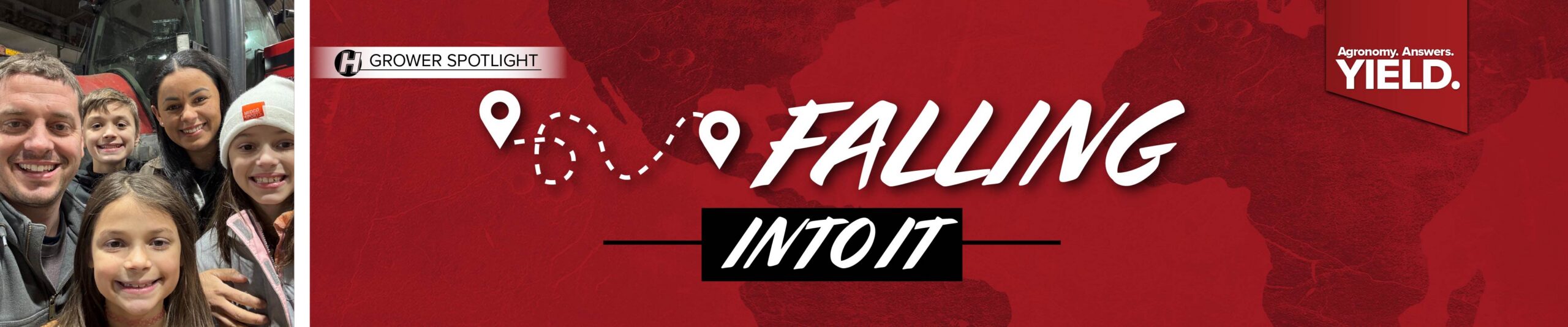

Sometimes, perspectives built over a journey of self-discovery wind up leading back home, something Tarek Schanilec knows all too well.
Schanilec, 40, grew up on his family’s operation near Forest River, North Dakota, which lies just northwest of Grand Forks in the Red River Valley. Even though Tarek was active in farm activity from a young age, he didn’t inherit an immediate passion for it like many do when they’re born into it – like Tarek’s father, Brad.
“I guess I grew up with farming,” Tarek said. “Dad, though, he grew up on the farm. He loved it, but sometimes with family dynamics it just doesn’t work out so everyone could be on the farm. He ended up becoming an insurance agent, but he always had the love of farming in his heart.”
Despite not being the primary inheritor of the family operation, Brad kept about 120 farmable acres on the side because he wanted to teach his children the value of hard work and remind them of their heritage. The specific chores he had his kids do may have contributed to Tarek’s initial lack of enthusiasm.
“Dad would have us go out and pick weeds by hand,” Tarek said. “That was my first taste of farming and its work ethic, if you will. Our compensation would be a basketball camp or something like that, but the main thing was getting that work ethic.”
HOWEVER, WHAT LEFT THE BIGGEST IMPRESSION ON TAREK WAS HIS FATHER’S WILLINGNESS TO WORK ALONGSIDE ANYONE ON ANY TASK, NO MATTER HOW SMALL.
“Dad would not shy away from going and picking weeds with us when there was time,” Tarek said. “It was never like – this is what you do when you’re young and you won’t have to do it when you’re older. You still have to work your butt off.”
That work ethic continued developing as Tarek grew older. At 16, he started working for his uncle, Rod, at Schanilec Farms while still helping out on his dad’s quarter, managing laborer crews. Eventually, he would graduate high school and head to Concordia College in Moorhead, Minnesota to study business management and Spanish.
During his college years, Tarek took advantage of his natural wanderlust – he loved travel and had an especially keen interest in Brazil due to having lived with Brazilian exchange students and J1 visa holders at his family’s home while in high school. These students would stay for a year on an informational and cultural exchange, with the goal of learning how American agriculture works.
This initial exposure inspired Tarek to travel to Brazil for a college business internship in 2008 with an American run farming operation near Luis Eduardo Magalhães, in the eastern Brazilian state of Bahia. While there, his interest in agriculture would only grow.
“I just had this passion to go see Brazil,” Tarek said. “It was quite an eye-opening experience. Most people, when they think of Brazil, they think of the beaches at Rio de Janeiro. I just saw agriculture.”
DURING HIS INTERNSHIP, TAREK WAS STRUCK BY THE COMPARISONS TO WHAT HE WAS USED TO BACK HOME IN NORTH DAKOTA.
The main crops he worked with were soybeans and cotton, and the lay of the land was flat much like the Red River Valley back home. But the most striking difference he observed was the character of the soil – in the area of Brazil where Tarek interned, the ground was red; not black like he was used to. In fact, much of the Brazilian farm ground was considered barren only about 50 years ago; it only entered into production agriculture after the application of lime made it possible.
Other comparisons with life back home emphasized the lack of complication in daily Brazilian life, built upon a foundation of working long, hard days with little connection to the outside world.
“We were sent out to a farm, and it’s not like we get sent out to one with power and internet,” Tarek said. “There would be hours of the day where the generator would be turned off, and we had little to no cell reception. I remember trying to climb a tower just to get one bar so we could make a call into town for parts.”
“We’d live on these farms for two weeks at a time, 12-hour daily shifts, so you were immersed in culture. We had to wash clothing by hand every day. Food was rice and beans every day. It was quite an experience where you learn to appreciate the little things that you do have, like a variety of food, taking a shower in hot water, a vehicle – I really learned how to appreciate the little things in life.”
Upon returning home, Tarek wasn’t yet sure what he was going to do with his life, but his interest in Brazil remained. So, six months after graduating college in 2009, Tarek returned to Brazil to work in ag again, this time to Morro do Chapéu, also in the State of Bahia. This time around, the language barrier was a bigger obstacle, so Tarek worked to learn Portuguese by memorizing 30 new words each day.
HE ALSO HAD THE HELP OF HIS NEW FRIEND, KASSIA.
“I was around a lot of people that didn’t speak English,” Tarek said. “At that time, she didn’t speak any English either, but it was nice to have that person, that friend you can hang out with.”
After six months, the season had ended and it was time to return home. By this point, he was fully committed to pursuing farm life, so he returned to work on Schanilec Farms with Uncle Rod and Mark Wasylow, a mechanically minded hired man who, to Tarek, was less of a hired man and more like another member of the family. Together, these two figures became mentors to Tarek as he turned his focus to learning more about the family business in earnest.
“The passion to get better at farming slowly evolved within me,” he said. “I got to understand it better, appreciate it more as I got older. I learned a lot from Uncle Rod, a lot about agronomy, about how to be efficient – how to farm, basically. Mark was like an uncle to me. He taught me to be a good person, and he made everything fun, too. His strength was mechanics, so everything I know about mechanics came from him.”
Meanwhile, Tarek stayed in contact with Kassia, back in Brazil. Eventually, he decided he wanted to show her around his corner of North Dakota, so he flew her up in June of 2011. She stayed in the U.S. for six months.
WHEN SHE EVENTUALLY HAD TO RETURN HOME, TAREK COULDN’T HANDLE BEING APART.
“I thought, ‘Dang it! I miss her! I’m going to go down there.’” So, he dropped everything and followed her back to Morro do Chapéu, staying there for two weeks. While there, he asked Kassia’s father if he’d be open to the idea of them getting married. On March 28, 2012, he proposed to her; the couple has been married since 2013.
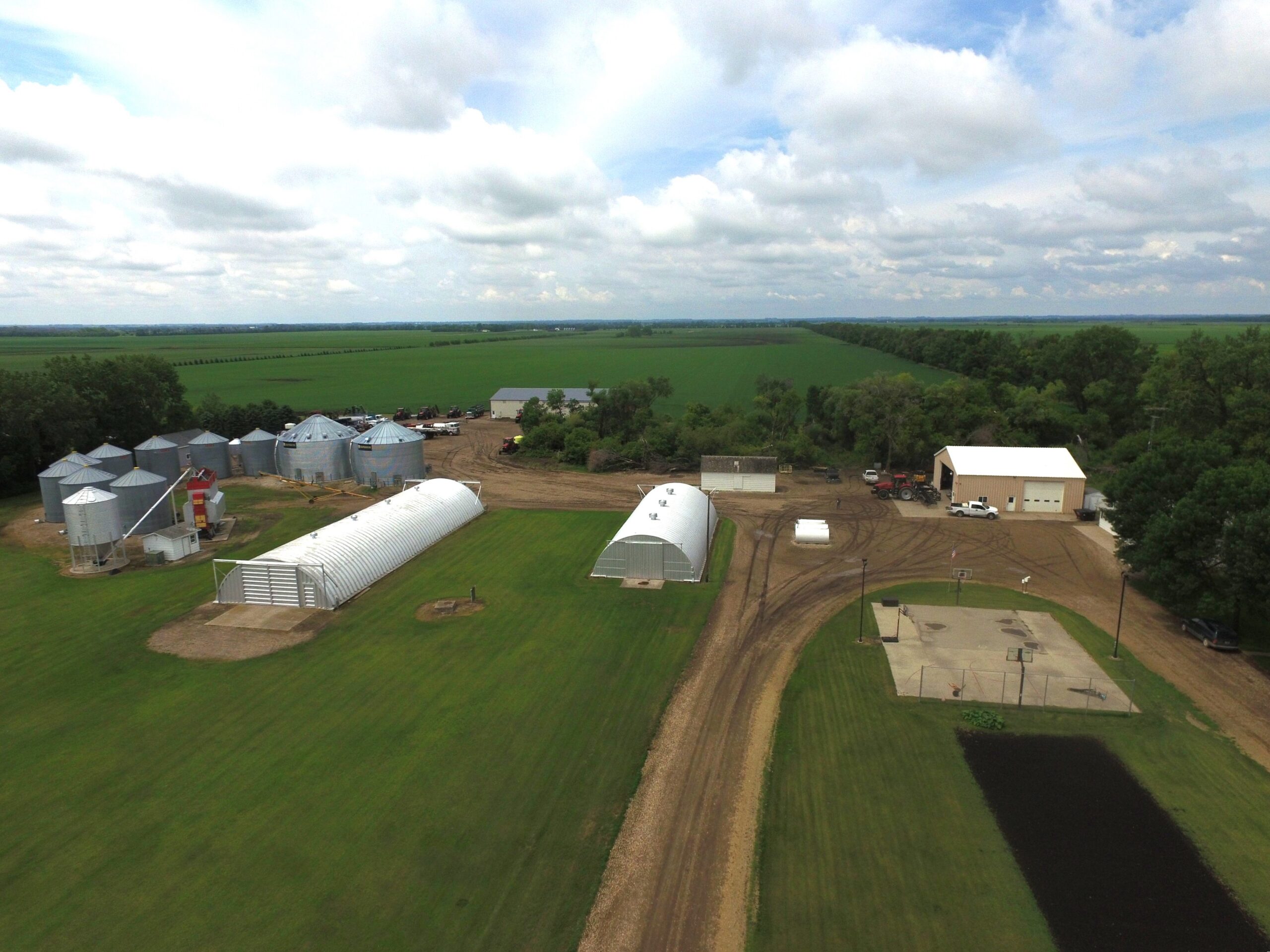
Over the next several years, Tarek would continue to learn the ins and outs of farming from Mark and his uncle Rod, raising sugar beets, corn, edible beans, and wheat. As time passed, his love of it would only grow. Eventually in the late 2010s, Rod decided to retire, and he invited Tarek to be a permanent part of bringing the operation forward.
“Uncle Rod wanted to retire, and he saw the passion that I have with farming, the effort I put into it, and he gave me the reins,” Tarek said. Tarek partnered with Ben Schanilec, one of his cousins, and the two men now divide duties according to their strengths and what tasks needed to be accomplished – Ben takes care of the bookkeeping and business aspects while Tarek handles general operations and equipment.
They also bring on hired help from South Africa – three men named Elandre, Tiaan, and Darren, who work as equipment operators and have become close family friends over the years.
“I’m a grease monkey, for sure, but I also plant all our sugar beets, all the edible beans, I plant a lot of the corn, and I cultivate all the beans,” Tarek said. “I am out in the fields all the time, taking care of the crops, and spraying. You get to see a lot of things and learn a lot of things in the field, you witness it. A lot of my experience and knowledge has been my experience of seeing everything firsthand.”
Those experiences have come with growing pains and operational challenges, as farming can be a high-cost, high-risk profession. In particular, the cost of everything seemed to skyrocket immediately after Tarek and Ben came into management.
“When Uncle Rod retired and handed over the reins, it was right before Covid,” Tarek said. “One thing I thought was interesting after Covid was just how the expenses of everything went up so much. Everything Rod had to deal with on the expense side, it was like a new world for us. Every number he had, it was like we had to add another zero behind it.”
DESPITE THE ISSUES WITH INPUT AFFORDABILITY, TAREK IS WORKING TO IMPROVE EVERY ASPECT OF HIS FARM. PRIMARILY, HE’S TACKLING REDUCING EROSION AND IMPROVING OVERALL CROP NUTRITION.
“In my view, the biggest thing we have to overcome is soil erosion,” Tarek said. “It seems like the winds here have really been getting stronger. We have these huge gusts, especially in the spring, with a lot of blowing soil. I hate seeing that. What I’ve really incorporated the last two or three years has been cover crops. We try to plant them right after harvesting edible beans and potatoes, and that has helped immensely.”
He also has expanded soil analysis to include zone sampling and collecting more detailed reports of all nutrients.
Armed with this information, he has adjusted fertility plans accordingly, incorporating variable rate fertilizing practices and applying copper, zinc, and other micronutrients. “I’m doing full analysis on every crop,” Tarek said. “What’s really surprising that I’ve discovered is that our soils are fertile, but we are lacking in some of those micronutrients. Since I have picked up on that and been trying to correct it, our yields are still going up. In the last five years, we’ve been beating a lot of our on-farm records. Mother Nature is a big part of that, but I like to think I’m setting things up to be successful.”
“I’m doing full analysis on every crop,” Tarek said. “What’s really surprising that I’ve discovered is that our soils are fertile, but we are lacking in some of those micronutrients. Since I have picked up on that and been trying to correct it, our yields are still going up. In the last five years, we’ve been beating a lot of our on-farm records. Mother Nature is a big part of that, but I like to think I’m setting things up to be successful.”
To achieve his success, Tarek uses other resources at his disposal, such as Brian Sieben, his local Hefty Agronomist out of the store in Grafton, which is his primary source for crop protection.
“Brian’s a real good guy to work with,” Tarek said. “He gets our numbers back right away and is very attentive to our needs. With Brian, if he doesn’t know the answer to my questions, he’ll find out for me or send me to the person who does have the answer. I’m very happy.”
In addition to the support of his local Hefty store, Tarek has taken to watching Ag PhD to discover further information about fertility and farming practices. However, what he appreciates most is the way Brian and Darren make him proud of his decision to be a farmer.
“Fifteen, sixteen years ago, I wasn’t sure what I was going to do as a career,” Tarek said. “Farming kind of fell into my lap. But watching their show and seeing how Brian and Darren are advocates of agriculture, it makes me want to be an advocate of agriculture, also. They make it seem like farming is cool – it’s cool, it’s fun, it’s a way of life. They make it into a thing you feel you can be proud of.”
“I look forward to learning new things and being introduced to new practices, nutrients, and chemistry. I hope to improve what we’re doing and increase our yields. It’s going to be a constant evolution for me and this farm.”