Change is INEVITABLE…
And an unfortunate truth of the human experience is we often don’t appreciate what we have until the separation of time and experience grants us perspective needed to realize what we’ve had.
For Matt Gilbert, 44, who lives and farms in the prairie pothole region of the James River valley near Hitchcock, South Dakota, reflecting on his upbringing was a significant factor in his decision to continue the family business.
“Working with livestock is probably my first and fondest memories of when I was growing up,” he said. “Somebody needed help, and I was there to do it. I loved doing it when I was a kid. Running with the pigs, grinding lots and lots of feed, holding the pigs while my uncle would give shots. We’d do that for hours and hours and hours.”
Matt is a fourth-generation farmer and still has the documentation from when his great-grandpa Arthur got their first quarter in September 1896 via the Homestead Act.
By the time Matt came around, though, the farm was operated by his father, Kenny, and uncle, Gary. The family raised primarily wheat, with a few acres for soybeans and corn, in addition to raising pigs.
When Matt wasn’t helping with the pigs or swapping between riding along with his dad or uncle in their John Deere 4400 and 6600 combines during wheat harvest, he remained active in local activities with the other kids in his hometown.
“Growing up in the ‘80s, nobody had any money, but we still got to do things like swimming lessons and playing baseball,” Matt said. “As a kid, that’s all you could ever ask for – something to do, playing some games, and hanging out with your buddies. It doesn’t get much better than that.”
When Matt graduated high school in 2001, coming back to the farm wasn’t really in his plans, as he went off to SDSU to study sociology and criminal justice. During that first year away from home, he gained some perspective on what he really wanted to do with his life.
“As I got away from the farm and away from doing all the things I took for granted, I started missing it,” Matt said. “I’d come home from school on the weekends and work most of the time. You start looking at what you want to do and think, ‘Maybe this isn’t so bad after all.’”
The spring of his freshman year, Matt started doing more field work at home, running the sprayer, driving the family’s new semi truck, and operating and repairing equipment. When he returned for his sophomore year, he switched his studies to general ag and eventually narrowed it down to animal science, with the goal of returning home.
One of the aspects of farming he appreciates most is the variety of tasks that need taking care of keeps things interesting, while at the same time the pace of doing many of those tasks became peaceful, almost meditative for him.
“It’s fun watching the seasons change, seeing projects get done,” Matt said. “The variety, that’s the part I always liked. It wasn’t plant, spray, harvest. We took care of pigs, there was feed to grind, cattle to check, and hay to put up. A guy needs a variety of stuff to do. Otherwise, you get stuck in a rut.”
“I don’t know how people can sit in an office and run numbers on a spreadsheet for 40 hours a week. I’m not built that way. Not that I have much for extra time, but just going back out and doing those things I like doing like sitting in a 3010 and running the rake, it’s soothing. You can just sit with your thoughts and enjoy it.”
As Matt transitioned more and more into managing the operation, challenges and resulting changes came with the territory.
Despite his love of livestock being part of returning to the farm, the Gilberts have largely phased out that income stream. They’ve also changed their cropping profile into primarily a corn-soybean rotation. The geography of east-central South Dakota also presents an obstacle to overcome, but the farm has stayed ahead of it by adopting new technologies to improve efficiency and yield.
“We’re pretty flat,” he said. “If the old saying is, ‘Our state is so flat, you can watch your dog running away for 3 days…’ Well, it’s 7 days here. We’re flat, but we have potholes. Our corn populations range from 15,000 to 32,000. That’s tech my grandpa never had, and that’s been the real challenge – figuring out fields and fertility plans, just trying to maximize what we’re getting for a return.”
Weather patterns also make raising crops a challenge, as their number one concern with cultural practices is moisture preservation. Most of their acres are no-till, with some strip-tillage hired out on a third to half of their corn acres.
“I hate tillage,” Matt said. “Guys think if they have something like a Salford that they have to take it out and use it, but I don’t do that if I don’t have to. I don’t like it. I’d just as soon go out and plant. Strip-till has been a practice I really like, though, because it gives a guy the opportunity to get fertilizer where it needs to be to more effectively feed the crop and allows us to push corn maturities a little bit because that soil will warm up a little quicker and give plants a little bit of a boost. We still just use that situationally, though.”
Over the years, the Gilberts have relied on the knowledge and assistance of trusted advisers, including their local Hefty Agronomists in Huron. In particular, for more than a decade the farm has worked with Kyle Wiese when composing their management plans for seed and chemical.
“Working with Kyle, I couldn’t be happier,” Matt said. “He knows his stuff, and his knowledge of seed and chemical stuff is great. He knows what my goals are, and that’s important, too. If I have a question on what’s this variety going to do, will it handle this acre, he’ll tell me right off the bat if it’s not going to work or if this other one will. Or with chemical, Kyle will say, ‘Hey, what if we did this instead and it’ll save you X amount of dollars?’ I couldn’t give you an actual percentage, but I know we’re saving a good chunk of money and we have clean fields.”
Matt also appreciates how Kyle feels like a partner in his success, as Kyle will regularly coordinate with Matt’s independent agronomist to share whatever knowledge he can to help guide the Gilbert farm to the make the most informed choices.
“Whatever decisions we make, I feel it’s the right decision,” Matt said. “Some guys just want to make a sale. I feel Kyle is in it for me just as much as he’s in it for him. He’s got my best interest in mind. He knows if you keep the customer happy and give them the product they want and desire, they’ll keep coming back. And we have.”
As Matt looks to the future, at his core he’s striving to build something that his children can also fall in love with and come back to continue on if they so choose.
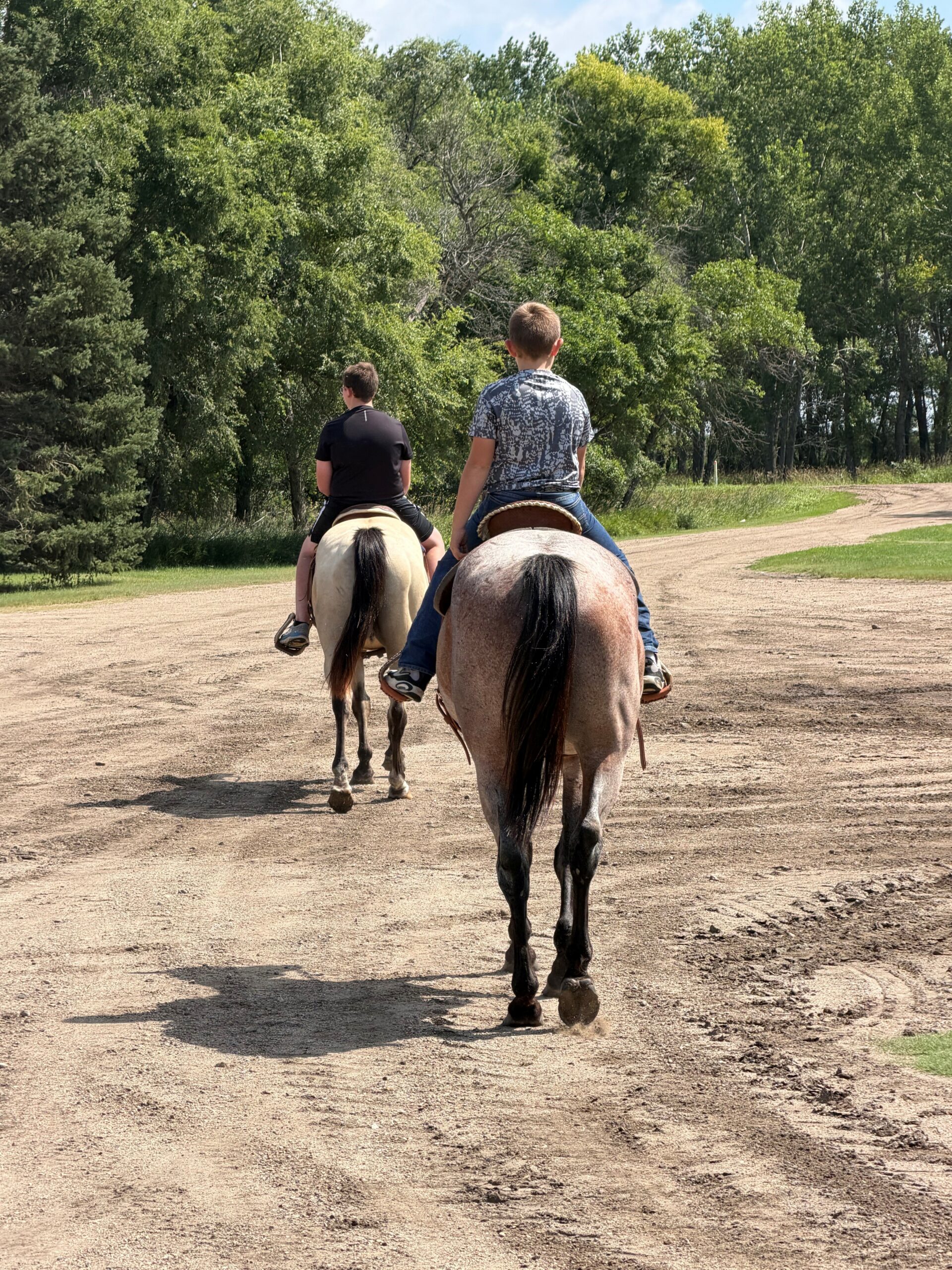
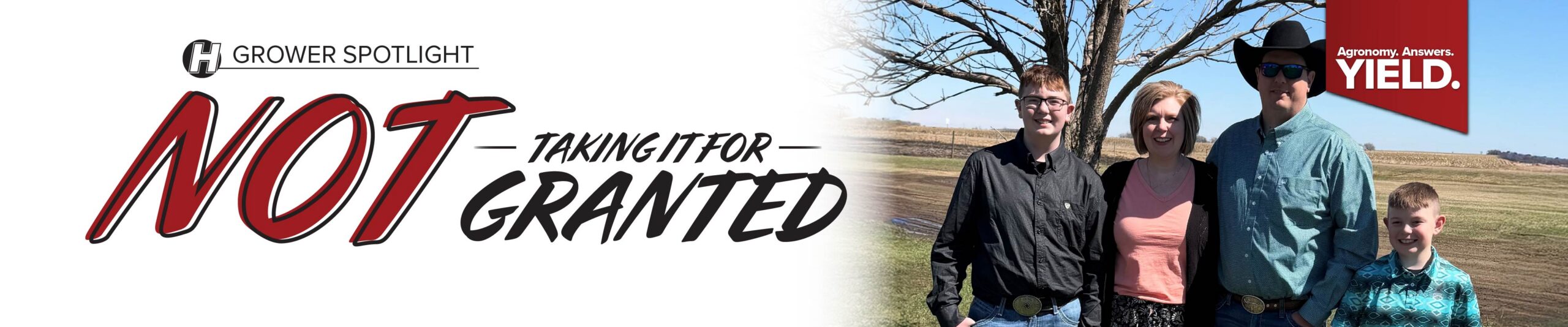
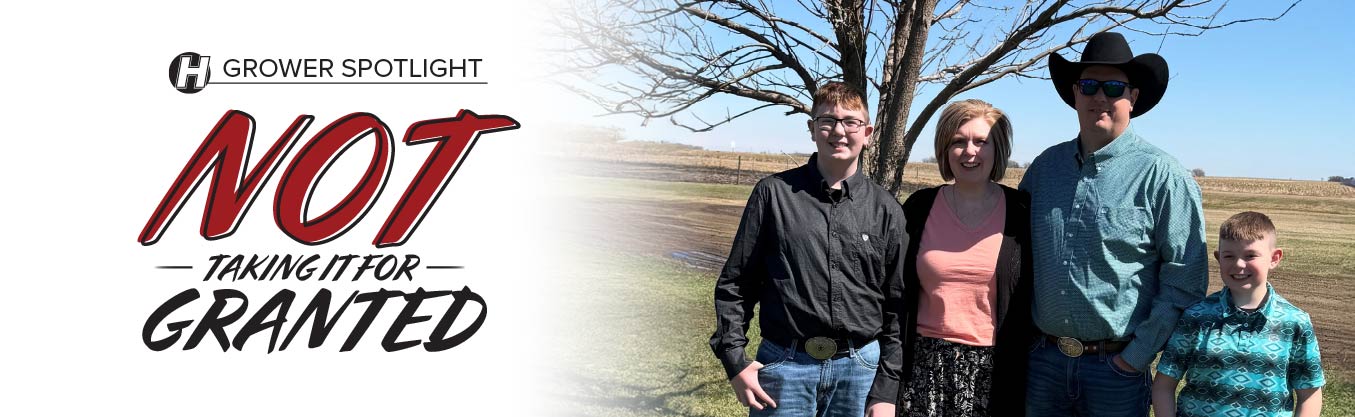
He and his wife, Brenda, have two boys – Grady, 12, and Emmitt, 9 – and they’re starting to take part in farm activities and show some interest in the operation. Although the future isn’t set, Matt wants to ensure that they have the option to build upon what his family has worked to establish, and he hopes that someday they’ll come to appreciate the farm life he once took for granted.
“If I look back on what I did to get here, I’ve had an absolute pile of help along the way,” he said. “With what you’ve sacrificed to get there in addition to what others have sacrificed to get you there, it’s humbling to see what vision you had and where it’s come. I didn’t get where I’m at by myself. It was a lot of hard work, but there was help along the way.”
“And any farm family wants that for the next generation. It’s an overused cliché, but I don’t do what I do for me – I do it for the next guy, the next generation. My grandpa would be thrilled if his great-great-grandkids were running the place. I’m already thinking about how to make things better for them so they can both come back if they want to carry it forward.”