

Are you still running TALC AND GRAPHITE in your planter for SEED FLOWABILITY?
If so, you’re far from alone, since nearly every grower in the U.S. will use talc and graphite to improve lubricity.
Since 2020, we have seen an explosion of planter box products with benefits ranging from rootworm protection, to reducing nitrogen, to adding micronutrients, and a strong case can be made to consider adoption of these products.
In 2026, an estimated 25 million acres were treated with a planter box additive.
Why? As operations upgrade to high-speed planters, fewer and fewer are equipped with in-furrow capabilities.
PLANTER BOX APPLICATIONS give you the opportunity to add biologicals and micronutrients at a timing you previously couldn’t without an in-furrow system. There are numerous benefits to using planter box products, but keep in mind there are some watchouts.
MOST IMPORTANTLY, PLANTER BOX PRODUCTS MUST BE EVENLY APPLIED TO SEED FOR THE BEST RESULTS. This can be accomplished with a CT applicator or treating seed from seed box to seed box before adding to a center fill planter. If you are dumping bags, apply planter box products to individual bags before adding to a planting system.
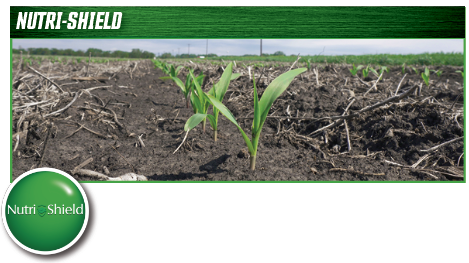
NUTRI-SHIELD is an excellent choice to consider adding to the planter box. This product is a combination of Nutri-Cycle’s 26 nutrient-solubilizing bacteria strains plus the 6 strains of fungi found in Heat Shield. Nutri-Cycle and Heat-Shield are foundational products of Hefty Complete Corn and Soybean seed treatments, and these strains of bacteria and fungi help establish a relationship between the plant and the soil profile allowing seedlings to access critical nutrients sooner, speeding emergence and stand establishment. This product has been in the Hefty Naturals portfolio since 2020 and was one of the first planter box product replacements in the market.
This product includes talc and graphite, but you also have the option of adding the graphite to the mix if needed.
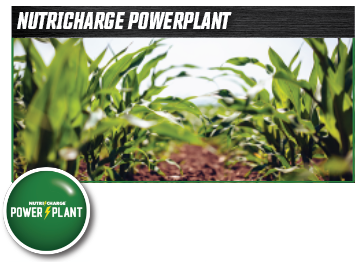
NUTRICHARGE POWERPLANT is another planter box product that combines NutriCharge, the micronutrients of zinc and manganese, and microalgae, along with a seed lubricant. This is designed to replace traditional talc and graphite. Over the years, we’ve seen a lot of success with NutriCharge protecting in-furrow phosphorus; with NutriCharge PowerPlant, you can take advantage of these benefits in the planter box if you don’t have in-furrow capabilities.
WHAT’S PERHAPS MOST INTERESTING ABOUT POWERPLANT IS THE ADDITION OF MICROALGAE, WHICH ACTS AS A FOOD SOURCE FOR NATIVE BIOLOGY FOUND IN THE SOIL PROFILE.
The product itself is non-living and shelf stable for extended periods, plus it provides the equivalent of 1 quart of liquid zinc in-furrow.

TS201 is an EPA-registered product for corn rootworm control. It is sold in the market under many brand names. You can mix TS201 with NutriCharge PowerPlant or purchase Bio-Wake Prime from AMVAC. TS201 is a living organism that falls into the category of PPFMS (PINK-PIGMENTED FACULTATIVE MATROTROPHS). These PPFMs grow along the root system of corn plants, confusing the signals corn releases that normally would attract rootworm larvae. In the case of other insecticides in the market that are a physical toxin to larvae, TS201 is literally playing a game of hide and seek with corn rootworm. If the rootworm larvae can’t find the root system to feed off of, they die.
TS201 is the first EPA-registered insecticide for rootworm protection that can be added to the planter box.
Finally, in the spring of 2025 Pivot Bio launched their newest product – PROVEN G3 PLANTER BOX. Prior to this launch, we often had to choose between in-furrow applications or having a dealer treat our seed through their seed treating systems. G3 combines PPFMs, Pivot Bio’s nitrogen-fixing strains, micronutrients, talc, and graphite to make it a complete package for the planter box. What we like about G3 is more consistent data, and Pivot Bio’s investment into BMPs (Best Management Practices). In 2025 data collected from areas where the BMPs were followed correctly, G3’s performance increased to a win rate of more than 90% versus the untreated acre. In the world of biologicals, this is unheard of. Moving into the 2027 planning season, nitrogen pricing remains elevated; with the cost of Pivot Bio, we can realistically look at lowering input costs by replacing some of nitrogen units with PROVEN G3. We like to think of Pivot Bio’s G3 product as weatherproof nitrogen and a foundational block in a complete nitrogen management plan.
In 2027, industry estimates predict the planter box market will double in size to nearly 45 million treated acres, and that trend is only expected to grow for years to come.
The benefit of this evolution is many farmers won’t have to add additional equipment to their planters to take advantage of the yield gains these products provide. The downside is there are 50+ companies all trying to sell similar products. How does each stack up? And most importantly, how do they look from an ROI standpoint? We tested all these products heavily in 2026 and look forward to sharing the data with you in the coming months and at our upcoming winter meetings, but our recommendation is always to pick a few and try them out on small acres to see how they perform on your farm. Your planter box options have a lot of yield-enhancing potential.