
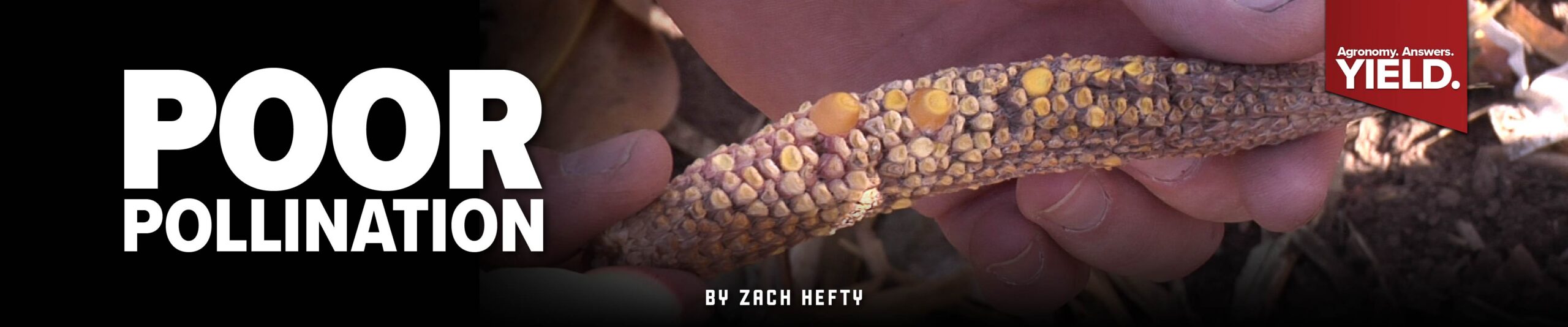
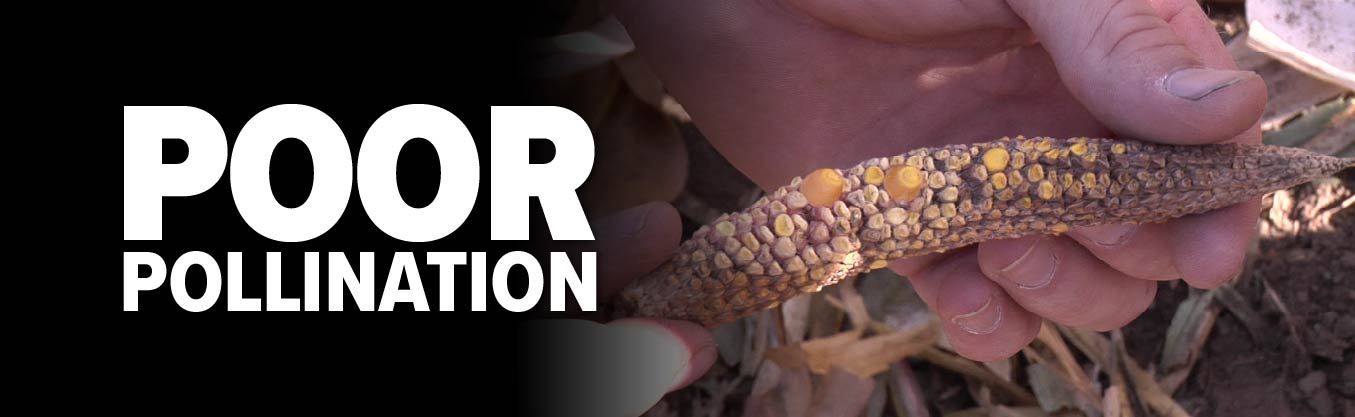
If you saw POOR POLLINATION this year, do not just think, “OH, THERE’S NOTHING I CAN DO ABOUT IT.”
Let me share with you a few lessons I learned from my dad, Brian, and my uncle, Darren, on how to give your corn its best shot for better germination.
IT ALL STEMS BACK TO RISK MANAGEMENT!
My dad and uncle are willing to take some risks, but there are many choices you can make to reduce poor pollination. Spoiler alert – it’s not just praying for better weather!

Let’s take last year as an example. There were a few specific hybrids that had tassel wrap, which prevented pollen from getting down to the silks to pollinate them. This isn’t a common thing, but you literally never know if a fluke like this may happen to you. If there was a second hybrid in the field, there should have been enough pollen for both hybrids because each corn tassel will produce roughly 2 million grains of pollen. Are you willing to risk a whole field of corn because you only want to plant last year’s plot winner? Instead, I’d recommend planting a couple of hybrids out there to increase your pollination window and, more importantly, decrease your worry.

BEFORE YOU PLANT CORN, YOU NEED TO KNOW IF YOUR PREVIOUS CROP SUPPORTED MYCORRHIZAE FUNGI OR NOT. If it did, great– you will not see the issue I will talk about. If it did not support it, that is not the end of the world, but it does mean you may need to make a couple adjustments. This is another lesson in planning. If you think you want to plant corn in next year, that may change what you plant for a cash crop or cover crop this year. Mycorrhizal fungi improve the plant’s ability to access nutrients and water uptake. Corn roots and these fungi have a symbiotic relationship that dramatically helps your plant. A couple examples of crops that do not support these fungi are sugarbeets and radishes. So, if you plant corn following these crops, you may see purple in the leaves early in the year because phosphorus is one of the biggest nutrients limited to corn in the absence of active mycorrhizal fungi in soil. If you still want to plant corn after fallow or after raising a crop that doesn’t support mycorrhizal fungi, we suggest applying high rates of phosphorus along with products like NutriCharge. Even that may not be enough, but it will sure help.

IF YOU HAVE LIGHTER SOIL AND/OR YOU DON’T HAVE IRRIGATION, YOU MAY BE OVERPOPULATING THESE AREAS. Something I learned when I got back on the farm is the importance of varying the rate of seed on every acre. In corn, we place more seeds in our better areas and fewer in our tougher, lighter, sandier ground. This is due to the fact we are all non-irrigated, so these areas dry out much more quickly, and we want less competition. This is true in lower fertility areas, too. If you do not want to apply more fertility, then you can plant fewer seeds so there are fewer mouths to feed. Be realistic about your yield goal. Then, if it works to cut back on population, you get to save money up front.

ONE OF THE BIGGEST LESSONS I HAVE EVER LEARNED FROM MY DAD AND UNCLE IS HOW TO READ A SOIL TEST. To be honest, it did look super intimidating the first time I saw them. But once I committed to stick to it and learn, then it wasn’t so bad. Soil tests do take some practice to understand but arguably may be the biggest success factor for your farm. Great fertility recommendations and putting the correct amount in the right places are way more important than hybrid selection or even how cheaply you can buy Roundup. Knowing what’s in your soil can help mitigate plant health and disease issues you may see later in the year and help you reach your yield potential. If the plant is deficient in potassium, for example, we see more lodging and standability problems. Another example is zinc; it’s a critical micronutrient that you don’t need much of – and it isn’t too expensive – but one thing it helps with is pollen viability.
Maybe it was just hot around tassel time and that affected pollination. Maybe it was a nutrient deficiency. The only way to rule out fertility is to look at soil samples, ideally in smaller grids. Plant health is just like human health; with the right nutrition, we can battle through stress better.
THERE ARE WAYS TO MITIGATE POOR POLLINATION, BUT DOING ALL THESE THINGS DOESN’T GUARANTEE IT WON’T HAPPEN. THESE ARE JUST WAYS YOU CAN REDUCE YOUR RISK. HOWEVER, IF YOU IMPLEMENT THESE SAME LESSONS I HAVE LEARNED, YOU’LL HAVE A MUCH BETTER CHANCE OF SUCCESS IN THE FUTURE.